 The AC running without cooling in Arizona summer is its own category of problem. Not an inconvenience. Not something to monitor and see how it develops. Indoor temperature in a house that’s lost cooling climbs toward outdoor temperature faster than most people have experienced, and when outdoor temperature is 115, the math on that is not comfortable. This is the situation where the right call is to figure out what’s wrong right now rather than wait and see.
Check the Filter First
Pull it out and look at it. If it’s grey and visibly packed, that’s the answer before anything else gets checked. A clogged filter in an Arizona home running peak summer hours doesn’t just reduce efficiency, it starves the evaporator coil of the airflow it needs to absorb heat, and the system runs continuously, accomplishing nothing. The symptom is identical to refrigerant loss from inside the house. The fix is three dollars and three minutes rather than a service call.
This gets skipped because it seems too simple. It’s the actual cause of a significant number of no-cooling calls in summer. Replace the filter, run the system for thirty minutes, and see what happens. If the cooling comes back, the problem is solved. If it doesn’t, move on to the next thing to get checked.
Arizona homes running the system continuously through summer need filter changes more frequently than the packaging suggests. Every thirty to forty-five days during peak operation rather than the ninety-day guidance written for moderate climates. A filter that’s been in since May and hasn’t been changed is a filter that’s probably the problem by July.
Refrigerant
Refrigerant carries heat out of the house. The indoor coil absorbs heat from the air into the refrigerant; the outdoor unit dumps it outside. When the level drops the system loses capacity to absorb heat, and the air coming through the vents gets progressively less cold until eventually the house just climbs regardless of what the thermostat says.
Ice on the refrigerant lines coming from the indoor unit is the sign that points here. It looks wrong for Arizona summer, but low refrigerant pressure causes moisture to freeze on contact with the coil surface. Ice in July on the lines running from the indoor unit means refrigerant loss until proven otherwise.
A system that’s iced over needs to thaw completely before anything gets assessed or repaired. Turn it off or run fan-only for several hours. Running it in cooling mode with a frozen coil pushes the compressor toward failure and turns a refrigerant repair into something considerably more expensive. Let it thaw, then have someone find and fix the leak rather than just adding refrigerant and calling it done. Refrigerant doesn’t get consumed; if the level is low, there’s a leak running somewhere, and the same failure returns in weeks if the source doesn’t get found.
Go Look at the Outdoor Unit
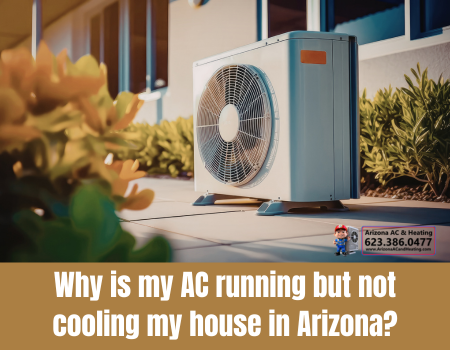
Walk outside. This step catches problems in Arizona that don’t really exist in other climates. The condenser coil fins on the outdoor unit pack with debris from dust storms. Cottonwood season stuffs visible material into the coil’s surface. A unit that’s been through a haboob season without being cleaned has reduced heat rejection capacity in a way that shows up as the house not cooling rather than as an obvious equipment problem.
The outdoor unit’s job is dumping the heat it pulled from inside into the outdoor air. A coil that can’t do that efficiently makes the system run harder and longer without hitting the setpoint. Hose off the fins gently from the inside out before calling anyone. It sometimes resolves the problem entirely.
While outside, is the fan on top spinning? Is the compressor running? A unit where the fan isn’t moving, or that’s making a new sound, has a mechanical problem that nothing on this list addresses. That’s a technician situation regardless of what else gets checked.
Vents and Airflow Changed Cooling
Closed vents in unused rooms feel logical and work against the system by increasing static pressure in the ductwork. Open everything. Every vent in the house regardless of whether the room is being used. This takes two minutes and occasionally fixes a problem that was building for months.
Ductwork that’s come loose, insulation collapsed onto a flex duct somewhere in the attic, and a connection that separated at a register—these reduce how much cooled air actually reaches the living space while the system works normally producing it. The system is doing its job. The air isn’t getting there. Specific rooms that are significantly warmer than others while the system runs suggest a duct issue in that area rather than a system-wide problem.
When to Stop Troubleshooting
A system running continuously, producing air that’s barely cooler than the room it’s coming from, unable to bring the house temperature down after hours of operation — that’s past the point of the filter check and the outdoor coil rinse. That combination usually means refrigerant loss or a mechanical issue that requires equipment and a technician to diagnose properly.
The troubleshooting that’s worth doing first takes twenty minutes. Filter check, outdoor unit inspection, vent audit. These are free and catch a meaningful percentage of no-cooling situations before anyone gets dispatched. Everything after that is a professional conversation that should happen quickly in Arizona summer because the alternative is waiting in a house that’s heading somewhere uncomfortable fast.